The person behind The New Forest Mind Clinic.
Hello, I'm Sophia!
Outside of the therapy room, I'm a mum to a brilliant teenage daughter, a slightly obsessed mountain lover and the owner of Alfie, a Cockapoo who occasionally makes a guest appearance during online sessions.
I discovered hiking around six years ago, and somewhere along the way it became much more than a hobby. There's something about being in the mountains that helps me slow down, make sense of things and reconnect with myself.
I've also had my own experiences of navigating mental health difficulties and discovering my neurodivergence later in life. Those experiences have shaped how I see the world, how I understand other people and, inevitably, the kind of therapist I've become.
I don't believe being a psychotherapist means leaving your personality at the therapy room door. I'm a professional, but I'm also a human being with my own experiences, quirks and imperfections. And I think there's value in that.
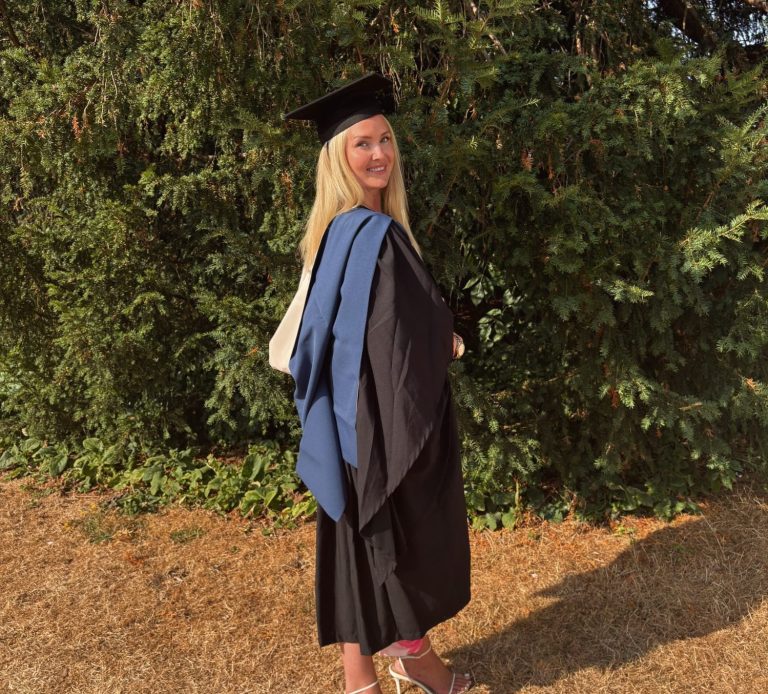
Professional & Academic Qualifications
PGDip High-Intensity Psychological Therapy
BABCP Accredited Cognitive Behavioural Psychotherapist
PGDip Mental Health Nursing
NMC Registered Mental Health Nurse
BSc (Hons) Psychology | 2:1
Additional Training & CPD
Dialectical Behaviour Therapy (DBT) — Essential Skills
Cope, Copehend, Connect (CCC) — Dr Isabel Copeland
Diploma in Addiction Psychotherapy (CoE)
Level 8 Certificate in Cognitive Behaviour Therapy (CBT)
Level 8 Certificate in Coaching
The Story Behind The New Forest Mind Clinic
The Beginning
My journey into psychology began through my own life experiences.
In my early twenties, after years of instability, becoming a mum prompted a deep need for change and self-understanding. I had spent time within mental health services myself and tried a few different therapies and therapists, including CBT, but I never engaged properly, or for very long. And I didn't walk away from those experiences because I was difficult, but because something essential was missing.
I never felt properly understood.
I believed it was a waste of time and that talking therapy couldn't really help. Everything shifted one evening during a psychology class on my access course - I was introduced to the idea that our experiences shape who we are, that there are well-developed theories behind human behaviour, and that the brain has the capacity to change and rewire itself. I began to realise how limited my understanding of the brain and behaviour was, and I found myself deeply fascinated by the human mind.
I went on to study Psychology at university.
I wanted to understand why people do what they do, why we behave towards and relate to people the way we do, why some experiences leave lasting marks while others fade, and why we can know something in our mind yet feel something entirely different emotionally.
In many ways, I was trying to make sense of (and peace with) my own story, seeking to understand myself through understanding others.
The Journey
My path to becoming a therapist was also not a straight line.
Before training in psychotherapy, I built my career working in some of the most complex and often overlooked areas of human experience - substance use, homelessness, probation, and psychiatric nursing.
These were not easy environments. They brought me face to face with people navigating poverty, addiction, trauma, the criminal justice system, and profound social marginalisation - people who are too often dismissed or misunderstood by the very systems designed to support them.
Working in these settings taught me far more than any textbook could.
I came to understand that shame is one of the heaviest burdens a person can carry, and one of the greatest barriers to change.
What may appear as self-destruction from the outside is so often an attempt to cope, to survive, to feel something - or feel nothing at all.
I also witnessed people achieve remarkable transformation, even after years of pain, but only when they felt genuinely safe, heard, and respected.
These experiences shaped the way I work. I learned, deeply and genuinely, how to sit alongside people without judgement.
When you have supported someone through the realities of rough sleeping, active addiction, or acute mental health crisis, you quickly realise that life is complex, people are complex, and that the world needs more understanding and compassion.
During my nursing career, I also became increasingly aware of something that didn't sit right with me - the tendency to pathologise trauma and lived experience.
Distress was often reduced to labels and diagnoses, treated as symptoms to be managed rather than experiences to be understood.
While the medical model has its place, it cannot tell the whole story.
People are not their diagnoses, and when we approach distress without curiosity, we risk missing what truly matters.
For me, the most important question became not "What is wrong with you?" but "What has happened to you?"
And I knew I needed to do something different.
The Clinic
When I think about why I created The New Forest Mind Clinic, I often find myself coming back to the person I was in my early twenties.
Someone who wanted things to be different, but didn't really understand herself. Someone who had sought help, sat in therapy rooms and walked away feeling that perhaps therapy just wasn't for her.
I wonder how different those experiences might have been if I'd felt truly understood. If someone had been curious about the person behind the difficulties, rather than focusing primarily on the difficulties themselves.
Of course, I understand now that therapy is far more complicated than that. Finding the right therapist, being ready to engage and developing an understanding of ourselves can all take time. But those early experiences have stayed with me.
And they've influenced the kind of therapist I've wanted to become.
Over the years, both through my own experiences and through working in mental health services, I've come to realise just how easy it is for people to lose sight of themselves amongst all the labels, diagnoses and expectations placed upon them.
I've seen people who have spent years believing there's something fundamentally wrong with them, without ever really having the opportunity to understand how their experiences might have shaped the way they think, feel and behave.
And I suppose that's what I wanted to do differently.
I wanted to create somewhere that gave people the opportunity to make sense of themselves. Somewhere that recognised that our difficulties don't develop in isolation, and that understanding why we struggle can be just as important as learning how to manage those struggles.
I still believe in the value of diagnoses, psychological theories and evidence-based therapy. I've spent years studying and training in them, after all. But I've also learned that people are far more complicated than any model or diagnosis could ever account for.
That's really where The New Forest Mind Clinic came from.
A combination of everything I've experienced, everything I've learned and a genuine belief that people deserve to be understood as individuals.
I don't expect you to come to therapy knowing exactly what you need or what you want to change. Sometimes that's something we have to figure out together.
And I won't pretend to have all the answers.
But I will sit with you, think with you and help you find your own way through, at your pace, in your own language, on your own terms.
You deserve care that sees all of you.
That is what I am here to provide.